

Why Smart Scientists Struggle to Lead Research Teams
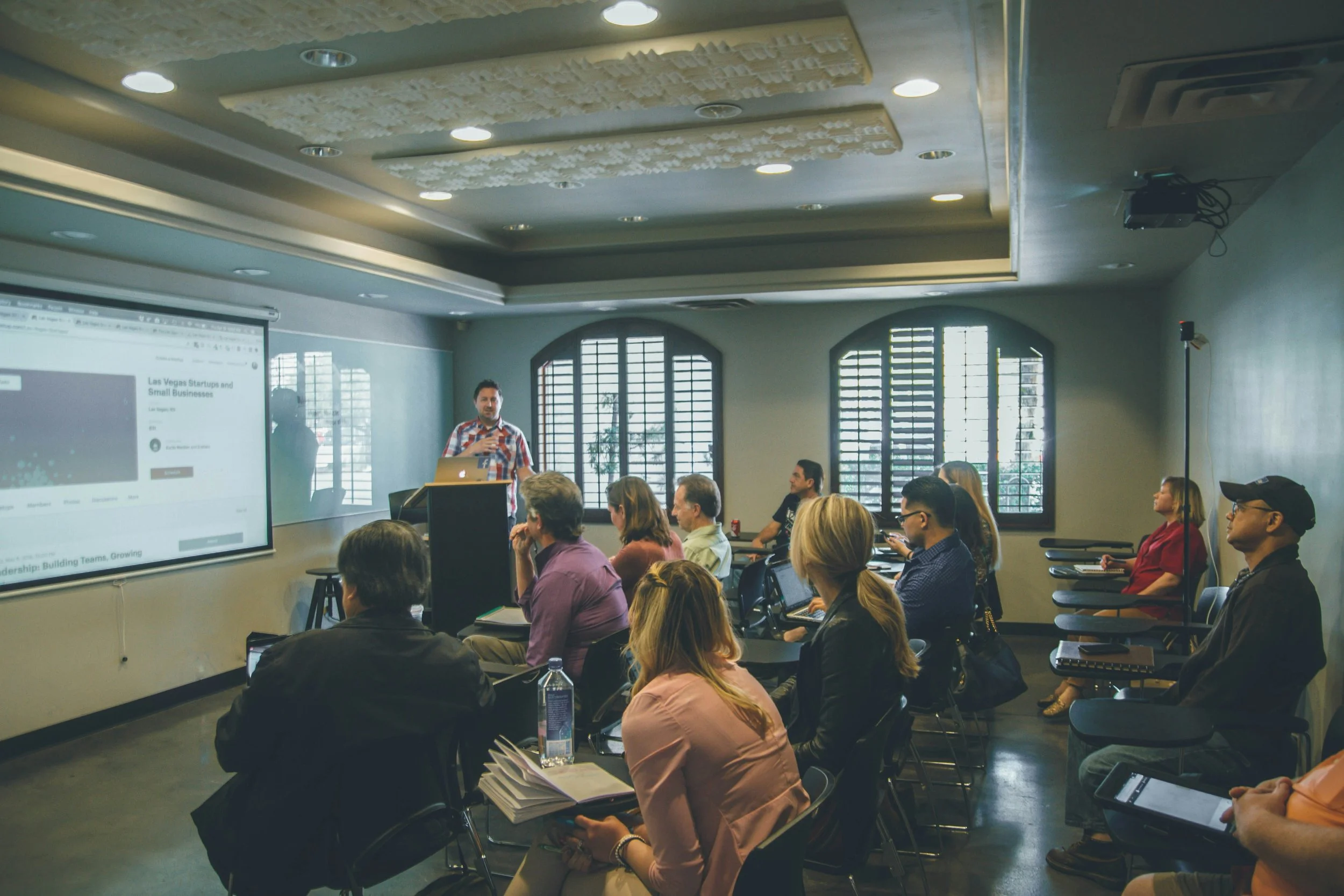
Leading a lab or center means addressing a management gap in your training.
The meeting ends.
Nobody disagreed. Nobody decided anything either. Three postdocs leave with different interpretations of the plan. The project manager rewrites the timeline again. The junior faculty member follows up privately because she didn't want to challenge the PI in the room.
The lab keeps moving forward in the most expensive way it can: through confusion, delay, and rework that never gets counted anywhere.
The science is not the problem. The team is.
THE SKILLS THAT GOT YOU HERE
The qualities that make someone an exceptional scientist are not the same qualities required to lead a research team. Universities promote scientists into leadership roles every day as if they are.
A brilliant researcher becomes a PI. A highly cited expert gets handed a center grant. A technically gifted scientist becomes responsible for coordinating people across disciplines, timelines, personalities, and institutional politics.
With this success, the work changes. Not because the science changed, but because leading a team requires a set of capacities that scientific training overlooks.
Having studied and supported scientific teams for over a decade, I have watched this play out in lab after lab.
A brilliant scientist becomes the center of everything: every decision, every draft, every conflict, every approval. At first, it looks efficient. Then the delays begin. People wait for feedback before moving. Meetings become status updates rather than places where decisions happen. Collaboration narrows because nobody wants to challenge the expert in the room.
Eventually, the team stops integrating and generating new ideas. Not because the people are unintelligent. Because the structure depends too heavily on one person's expertise, and that person was never given the tools to create conditions for collective intelligence.
That costs more than morale. It slows the science. And it quietly reduces a team's ability to compete for the large interdisciplinary grants that now define what counts as significant work.
THE PARADOX NOBODY NAMES
The same qualities that produced scientific excellence can work against team leadership when they're not balanced with something else.
Deep focus under pressure becomes tunnel vision on what matters. High standards, without a decision structure, create a bottleneck at the top. The comfort with complexity that allows a scientist to hold a difficult problem for years can become a tolerance for dysfunction that everyone else on the team finds exhausting.
The PI doesn't struggle to lead because they have stopped being smart. Intelligence was never the main variable. Research leadership runs on something different: the ability to coordinate expertise across people, disciplines, timelines, and competing priorities. That's a separate skill set. Almost nobody says it that plainly, and most training programs act like it isn't true.
WHAT THE INTEGRATION LAYER LOOKS LIKE
Strong research team leaders still care deeply about scientific rigor. But they've built something around the science that most labs are missing.
They create shared language across disciplines before the confusion has a chance to become conflict. They build decision structures that don't route every issue through the most senior person. They surface disagreements early rather than letting tension accumulate beneath the surface in a team that appears to be functioning. They distribute leadership based on who is closest to the work, not just who has the most impressive CV.
In interdisciplinary science, this matters more than it used to. Funding agencies now expect teams to demonstrate real collaboration across fields. Reviewers look for evidence that a team can actually integrate knowledge, not just list contributors with different affiliations. Many teams have the expertise. Far fewer have the coordination capacity to use it well, and reviewers can usually tell the difference.
THE TRAINING GAP INSTITUTIONS WON'T CLOSE ON THEIR OWN
Research institutions are asking scientists to lead increasingly complex collaborative teams while providing almost no preparation for that work. Scientists were trained to conduct research. Not to manage conflict, coordinate across disciplines, lead distributed teams, or build decision systems that function without constant intervention from the top.
And yet those capacities now shape whether large scientific collaborations succeed or stall.
The scientists who lead the next generation of successful research teams will be technically strong, yes. They will also know how to build teams that actually work together. That combination is still rare. But it's not a personality trait. It's learnable, and it's what the gap between a meeting that ends with decisions and a meeting that ends with three different interpretations of the plan actually comes down to.
If you're leading a team of excellent scientists that isn't functioning like an excellent team, the problem is probably not the talent. It's the integration layer around the talent.
That's buildable, with the right leadership and team training. Interested in learning more? Look here.
