

Leading complex collaboration is some of the most important work happening inside organizations today, and also some of the least understood.
I study how scientific and interdisciplinary teams coordinate complex work.
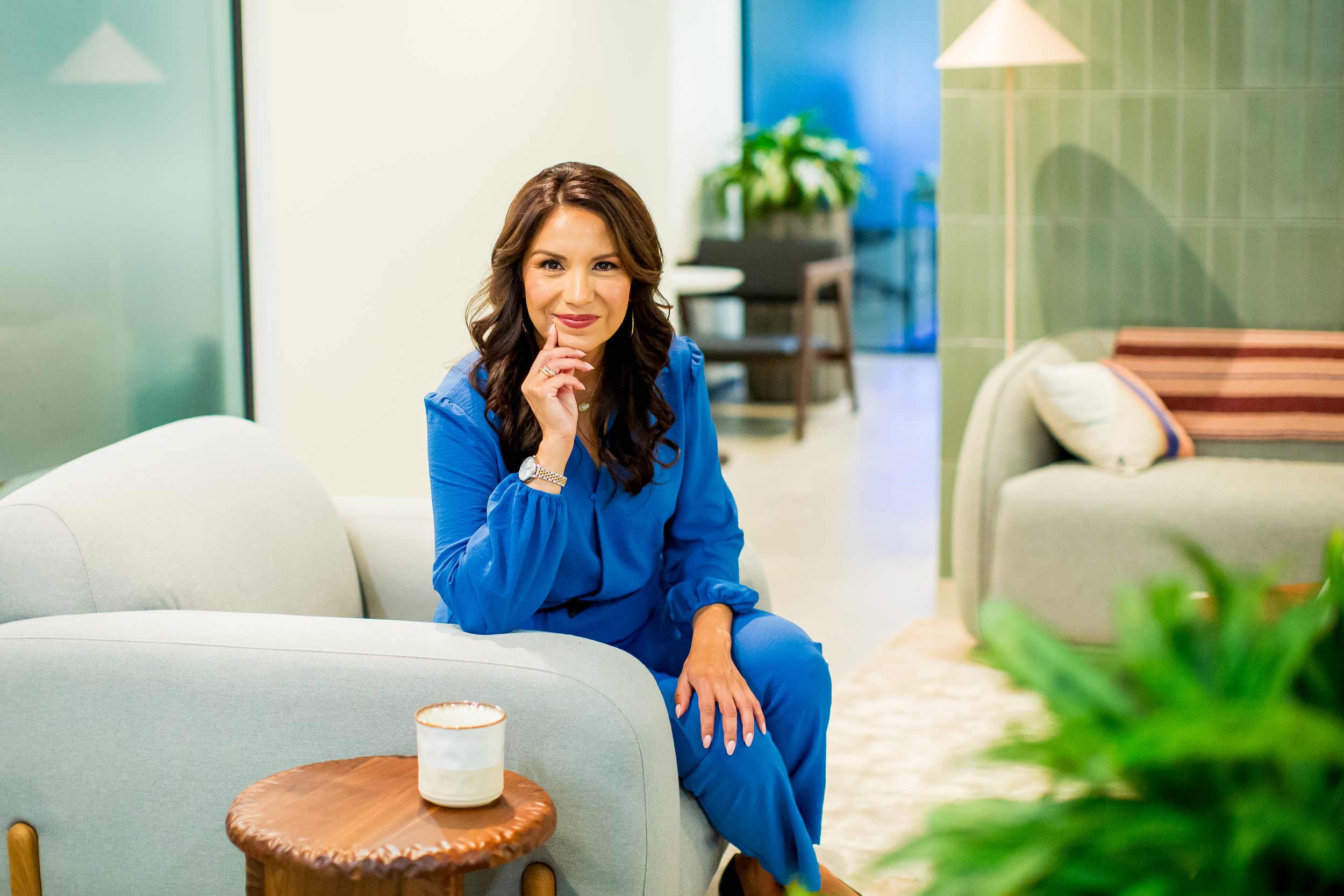
I’m Dr. Maritza Salazar Campo, a professor of organization and management at UC Irvine, where my research focuses on team science, collaborative leadership, and the coordination challenges that emerge inside modern research environments.
Today’s scientific and organizational problems increasingly depend on collaboration across disciplines, institutions, and areas of expertise.
But most professionals were trained to become technical experts — not leaders of complex collaboration.
That gap is what my research has spent over a decade trying to close.
The result is Integrative Capacity — a framework I developed to give scientific and interdisciplinary teams the structures they need to align diverse expertise, move decisions forward, and sustain collaboration under real pressure.
It is not a soft skills model. It is an operational one because there are easy-to-apply steps you can take now to make improvements.
And it is built entirely on evidence from studying how high-performing research teams actually work.
My Team Science Research
-
Salazar, M., Lant, T., Gibson, C., & Slyngstad, D. (in progress). Perspective Integration Capability: Unlocking the Innovation Potential of Expertise-Diverse Teams.
Salazar, M. R., & Lant, T. K. (2018). Facilitating Innovation in Interdisciplinary Teams: The Role of Leaders and Integrative Communication. Informing Science, 21, 157-178.
Salazar, M., Lant, T., Fiore, S., Salas, E. (2012). Integrative Capacity: A New Perspective for Understanding Interdisciplinary Team Processes and Outcomes. Small Group Research, DOI: 10.1177/1046496412453622.
-
Grossman, R., Campo, M. S., Feitosa, J., & Salas, E. (2021). Cross-cultural perspectives on collaboration: Differences between the Middle East and the United States. Journal of Business Research, 129, 2-13.
Salazar, M. & Salas, E. (2013). Reflection of Cross-Cultural Collaboration Science. Journal of Organizational Behavior. Vol. 34, pp. 910-917. DOI: 10.1002/job.1881.
Feitosa, J., Grossman, R., & Salazar, M. (2018). Debunking key assumptions about teams: The role of culture. American Psychologist, 73(4), 376-389.
Salas, E., Salazar, M., & Gelfand, M. (2012). Understanding Culture as Diversity. In Q. Roberson (Eds.), The Oxford Handbook of Diversity and Work. (pp. 31-51). Oxford: Oxford Press.
-
Báez, A., et al., (2023). Impact of COVID-19 on the Research Career Advancement of Health Equity Scholars from Diverse Backgrounds. International Journal of Environmental Research and Public Health, 20(6), 4750.
Mubasher, M., et al. (2023). The Role of Mock Reviewing Sessions in the National Research Mentoring Network Strategic Empowerment Tailored for Health Equity Investigators: A Randomized Controlled Study. International Journal of Environmental Research and Public Health, 20(9), 5738.
Mubasher, et al., (2021). Randomized Controlled Study to Test the Effectiveness of Developmental Network Coaching in the Career Advancement of Diverse Early-Stage Investigators (ESIs): Implementation Challenges and Lessons Learned. International Journal of Environmental Research and Public Health, 18(22), 12003.
Pruitt, B. L., et al.,(2023). Insights from an AIMBE Workshop: Diversifying Paths to Academic Leadership. Biomedical Engineering Education, 1-14.
Benson, G. S., McIntosh, C. K., Salazar, M., & Vaziri, H. (2020). Cultural values and definitions of career success. Human Resource Management Journal, 30(3), 392-421.
-
Campo, M. S., et al., (2023). Formative Evaluation of a Student Symptom Decision Tree for COVID-19. Health behavior and policy review, 10(1), 1140-1152.
Bisbey, T. M., Wooten, K. C., Campo, M. S., Lant, T. K., & Salas, E. (2021). Implementing an evidence-based competency model for science team training and evaluation: TeamMAPPS. Journal of Clinical and Translational Science, 5(1).
Alvarez, S., Salazar Campo, M, LaBeaud, D. (2022) Team Science and Infectious Disease Work: Exploring Opportunities and Challenges. Stewart Ibarra, A. & LaBeaud, D., In Infection Disease Work in a Changing World: People, Pathogens and Partnerships. Springer, 2022.
Sonesh, S., Gregory, M., Hughes, A., Feitosa, J, Benishek, L, Verhoeven, D, Patzer, B, Salazar, M., Gonzalez, L. Salas, E. (2015) Team Training in Obstetrics: A multi-level evaluation. Family, Systems, and Health.
-
Salazar, M. R., Feitosa, J., & Salas, E. (2017). Diversity and team creativity: Exploring underlying mechanisms. Group Dynamics: Theory, Research, and Practice, 21(4), 187-206.
Salazar, M. Mohammed, S. & Schulz, M. (in progress). More creative when we work together? The influence of temporal orientation diversity and shard temporal cognition in teams.
-
Salazar, M., Okhuysen, G., and Heejin, K., (in progress). Searching for a Cure: The Role of Scaffolding Interventions in Scientific Collaborations.
-
Salazar, M., Doiron, K., Widmer, K, and Lant, K. (2019). Leader integrative capabilities: A catalyst for effective inter-disciplinary teams. Hall, K., Vogel, A. and Croyle, R. Advancing Social and Behavioral Health Research through Cross-Disciplinary Team Science: Principles for Success. Cham, Switzerland: Springer, 2019 (pp. 313-328).
Slyngstad, D., DeMichele, A., Salazar, M. (2016) Team performance in knowledge work. In Eduardo Salas, Rico, Ramon, Neal Ashkanasy, Jonathon Passmore (Eds), The Wiley Handbook of Psychology of Team Working and Collaborative Processes. Malden, MA: John Wiley & Sons, Ltd. (pg. 43-72).
Salas, E., Salazar, M. Feitosa, J., & Kramer, W. (2013) Collaboration and Conflict in Work Teams. The Oxford Handbook of Organizational Climate and Culture. Oxford: Oxford Press
-
Salazar, M., Sengupta, P., Kim, H., Chung, B., Ledford, G. & Schneider, B. (In progress). Team Recovery and Performance: The Role of Team Engagement and Team Burnout
Chung, B., Ledford, G. & Schneider, Salazar, M. (in progress) Job characteristics and transformational leadership effects on well-being and subsequent outcomes.
Vaziri, H., Benson, G. S., & Salazar Campo, M. (2019). Hardworking coworkers: A multilevel cross‐national look at group work hours and work–family conflict. Journal of Organizational Behavior, 20 (6), pp. 676-692.
Trusted by leading organizations to align priorities and drive progress for their teams and organizations.





Six months into a well-resourced collaboration, the PI is making decisions she should not have to make alone. The co-investigators have drifted. Assumptions nobody has checked are running the show.
Nothing failed scientifically. The team structure failed the science.
This is an Integrative Capacity problem: teams have the expertise but lack the systems to integrate it.
I built this framework around that gap because nobody else was naming it directly. Most research development starts with credentials. Mine starts with creating enabling conditions.
This journey of discovery has taken me from Stanford to NYU's Stern School of Business to study team performance, and eventually to UCI's Merage School of Business, where I translate my data-backed research into curriculum, coaching, and the framework you see here.
The projects below are where that evidence continues to grow.

The science that the investigators and clinicians I work with matters. Curing illness, developing new therapeutics, and advancing what is understood about human health. That work deserves collaborative processes and structures worthy of it.
That is why I do this.
NAVIGATING NEW HORIZONS -
Take a look at some of my current NIH and NSF funded research projects:
(click images for more details)
Creating Conditions for Scientific Lab and Project Effectiveness with The Scientific Lab Accelerator

Creating Future-Proof Scientific Leaders with the Research Career Accelerator
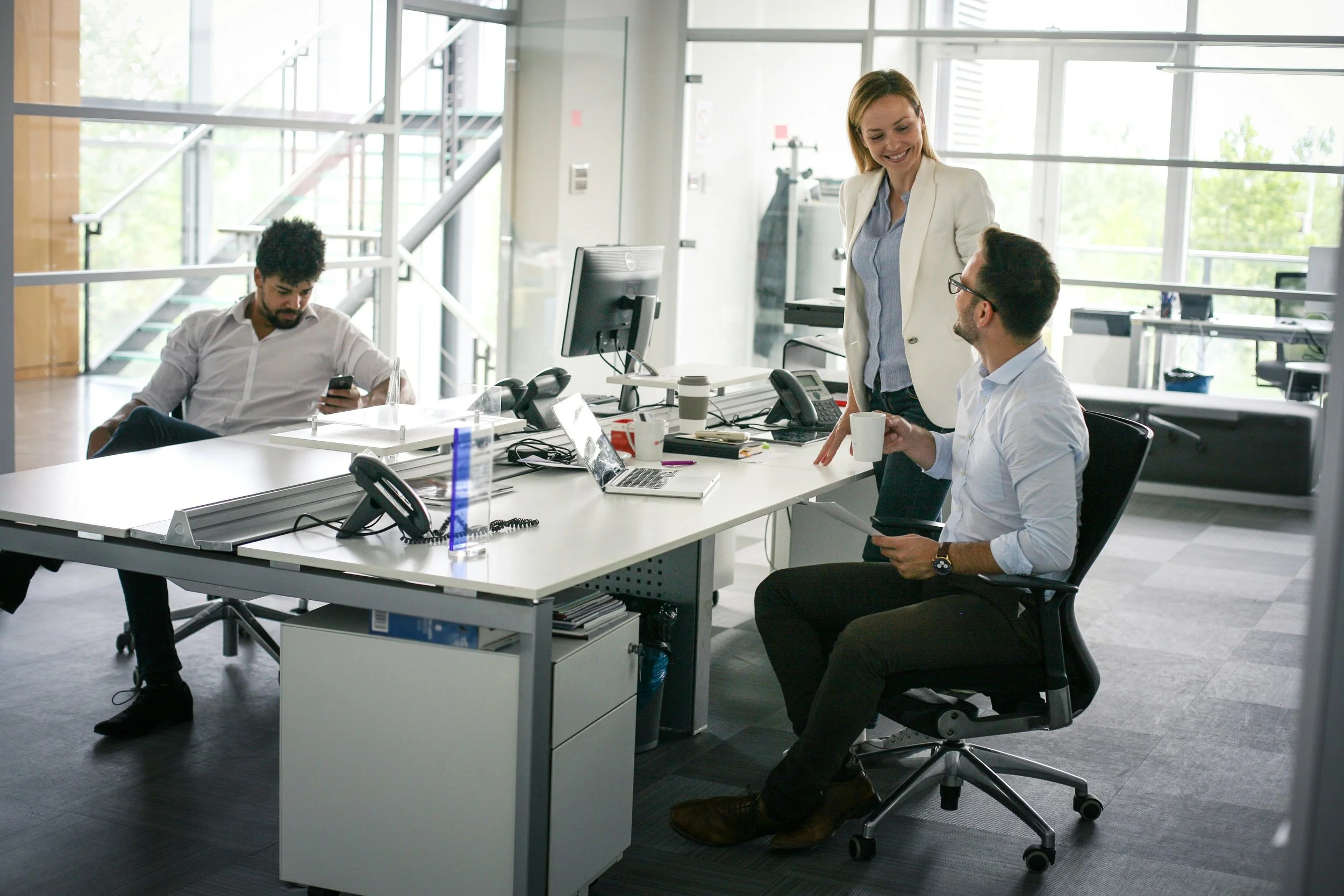
Managing People Better in Science, Engineering, and Healthcare
